
Thank you for Subscribing to Business Management Review Weekly Brief

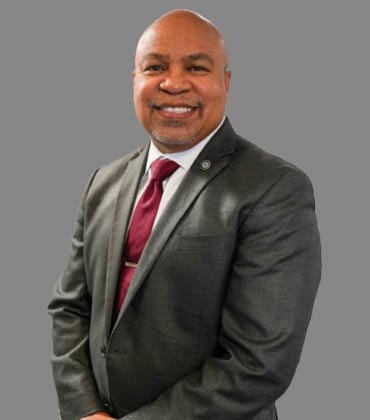 Carl Oscar Sherman, Managing Partner The Carl Sherman Group (TCSG) finds its strength in economic development projects where public priorities and private-sector ambitions need to move from mutual interest to mutual agreement. Whether the challenge is entering a new market, securing permits, or addressing a community need, TCSG serves as the bridge that helps stakeholders find a path forward.
Company :
Management
Carl Oscar Sherman, Managing Partner
![]()
Carl Oscar Sherman, Managing PartnerAn economic development project in a community can have everything it needs on paper and still fail to reach the execution stage. The local city council may see an opportunity to bring investment, jobs or needed development into its community. A developer, corporation or landowner proposing a viable project needs the city’s support to move forward. Both sides want the project to succeed, but they come to the table with different priorities, responsibilities and constraints.
TCSG is a Texas-based economic development firm that works with parties on both sides of the table, helping move projects and investments toward outcomes that work for all. It works through the points where competing interests and bureaucracy can cause promising opportunities to stall. It navigates permitting, negotiates incentives and infrastructure participation and brings the right stakeholders into a conversation where everyone says “Yes.”
“TCSG doesn’t just understand one side—government, real estate, or capital markets. Our firm is built to responsibly speak the languages of public responsibility and private enterprise,” says Carl Oscar Sherman, founder and managing partner. “That’s where deals get stuck, and we specialize in getting them unstuck.”
The firm’s ability to understand both sides of a discussion of proposed development is the result of Sherman’s experience in the public and private sectors. He has served as a mayor, city manager and Texas legislator while also building companies and taking one public on the Nasdaq and Frankfurt exchanges.
TCSG’s roots lie in a city that refused to let go of Sherman. When he declined an invitation to return to city management, the city of Ferris, where he had served as city manager, requested him to serve the city through a consulting agreement. That engagement became the foundation of a firm that brings the interests of public and private stakeholders to the table and finds common grounds where complicated opportunities turn into workable deals.
BEGIN WITH THE END IN MIND
TCSG’s philosophy is to first listen to and understand what its client is trying to achieve, then bring relevant interests and knowledge into the conversation.
“We are creative in finding solutions where others see dead ends,” says Sherman. “We believe that the best outcomes happen when every party wins, which is why we seek harmony in orchestrating a deal.”
Our firm is built to responsibly speak the languages of public responsibility and private enterprise. That’s where deals get stuck, and we specialize in getting them unstuck.
Economic development projects rarely stall because of only one issue.
Consider a developer who needs to present a viable project proposal and structure. A city also needs to determine if the project fits its priorities and can be defended publicly. Community stakeholders have their own expectations about what development should bring. When several parties have stakes in the outcome, TCSG seeks to guide the parties on a workable path forward.
A Methodist Hospital Rehabilitation Center project illustrates the value TCSG brings to the table. The project faced a drainage issue and required a retaining wall, which brought the U.S. Army Corps of Engineers into the process. A dispute emerged over who would bear the associated cost. TCSG was retained and helped negotiate an arrangement in which the city took ownership of that development component, enabling the partnership to proceed.
The real value of TCSG’s involvement is reflected in the words of Brandon Wright, former city manager of DeSoto:
 “At first, I wasn’t sure whether our public-private partnership with Methodist Hospital System would remain a win. That is until TCSG, with its real world experience, was retained by the group representing Methodist System. TCSG really saved the day because they understand what cities and developers need.”
A similar dynamic played out with a major single-family rental development in North Texas. The proposal by a developer from San Francisco represented a relatively unfamiliar form of residential development for the market, which led the project to be unanimously voted down by the city council.
TCSG met with the developer and then with policymakers to understand the concerns and identify solutions. Based on these meetings, it made changes to the proposal and brought it back for consideration. Less than two months later, it was unanimously approved.
Peggy Hsueh, vice president of operations, Maitland Management, commends the impact brought on by TCSG:
“We develop projects across North Texas: different cities, different codes, different local dynamics every time. What made the difference is TCSG. They don’t just understand our complex mixed-use projects; they get us straight to the key decision-makers, from city administration to elected officials. Their team has helped us cut through red tape, identify incentive opportunities and build stronger partnerships with local governments.”
-
We’re trusted by city leaders, developers and investors who know that our word is our bond. In our business, our word goes beyond a marketing channel, because our next potential client may be sitting in the room with the current one.
In both cases, TCSG’s role was to understand where the project had become stuck, bring the relevant parties back into the conversation and create a structure they could move forward with.
Trust in the TCSG name is what makes such outcomes possible. It becomes involved in a city or county project with relationships already established, allowing it to introduce clients to decision-makers who know its work and Sherman’s track record. His widespread experience, including serving as mayor of one city while managing another in a different county, has helped him build relationships across the public sector. The existing credibility gives clients confidence in the project’s prospects.
SITE SELECTION STARTS WITH THE COMMUNITY
Projects can get stuck before they even begin if the location isn’t right.
TCSG commissions studies specific to a project, using the resulting data to test whether the opportunity makes sense for that particular location. The community’s immediate, as well as future needs, are its first consideration in site selection.
Before it launches a market study, it engages the people who understand the community’s need for development projects from the inside. They are what Sherman calls the community’s “influence brokers”—mayors and council members, economic development directors, city managers, appointed leaders and long-standing members of the community. That community intelligence is combined with market intelligence to discover whether the community is prepared to accommodate and embrace a business.
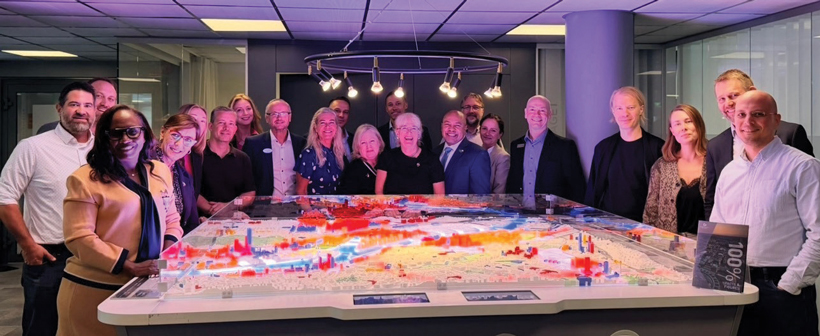 A grocery store serves as a useful example. Its site selection is carefully evaluated against eight factors or weights, as the economics of the roughly three percent profit margin associated with grocery operations leave little room for error.
Site selection based on market research enabled TCSG to tap into the emerging field of grocery recruitment in food deserts. The idea grew from Sherman’s conversations with cities and developers working on mixed-use developments that lacked a full-service grocery store within 10 miles. The question was how to attract a quality grocery operator that could profitably fill the need.
In response, TCSG has started commissioning grocery studies for food desert locations. Findings are typically returned in about 60 days. It then identifies operators whose requirements align with the community profile and works with them to assemble the capital required for market-entry costs.
TCSG is currently working on one such project, with two similar projects in the pipeline. While a grocery operator has not yet been finalized for the active project, TCSG continues to develop the private-sector side of the capital structure.
For private-sector clients that have already selected a site, TCSG helps negotiate incentives and infrastructure support. It handles discussions on roads and traffic intersection systems and participation involving city, county, state and sometimes federal entities. It also helps navigate permitting to avoid delays that can quickly become expensive.
WHEN CLIENTS BECOME THE GROWTH ENGINE
Assisting a community to secure private investment is its major value proposition.
In a defining instance, it worked with an APAC client to establish its first North American headquarters in a city of approximately 50,000 people. The upscale kitchen and bathroom cabinet manufacturer from Southeast Asia is phasing in an AI-robotics-driven operation expected to employ hundreds of people. For the community, it meant hundreds of jobs and a significant new corporate presence.
Alan E. Sims, retired city manager and mayor pro-tem of Cedar Hill, affirms the role played by TCSG in fostering development in the community:
“I can confidently say that TCSG stands out as a key partner in helping us bring the North American headquarters of GoldenHome Corporation to Cedar Hill, Texas. TCSG’s professionalism, insight and results-driven approach stand out. Their unique experience in both policy and administration at the local and state levels proved invaluable. I’m proud to see Cedar Hill continue to grow and thrive, and grateful for TCSG’s contribution to this achievement.”
TCSG’s referral-driven growth follows naturally from its community focus, driven by a deep-rooted sense of integrity and trust. A mayor tells another mayor, a developer refers another developer, or a city manager talks about it with a colleague at a TML or ICMA meeting. Nearly every significant, current engagement has come by word-of-mouth.
“We’re trusted by city leaders, developers and investors who know that our word is our bond,” says Sherman. “In our business, our word goes beyond a marketing channel, because our next potential client may be sitting in the room with the current one.”
GIVING CITIES ROOM TO THINK AHEAD
TCSG is also developing services aimed at a different kind of constraint; the lack of time and resources for local governments to think beyond the council agenda.
Sherman has seen the problem firsthand. Cities frequently recognize the need for long-term strategic planning, but face budget limitations or resident concerns about spending public money on what may appear to be a retreat.
TCSG’s answer is to offer complimentary strategic summits for city councils and city managers. It even underwrites the cost of the summits so that communities can work through their longer-term priorities without constraints.
BRINGING TOGETHER PERSPECTIVES
TCSG isn’t limiting its presence to the U.S. The same public-private model it developed domestically is now opening conversations with international companies and governments looking toward Texas.
It is expanding its European footprint through an official visit to Gothenburg, Sweden, requested by Sweden’s Consul General Helene Honeybone. Held in September 2026, it engaged Swedish government officials and executives from companies including Saab, Volvo and Ericsson around opportunities to strengthen their presence in Texas. Sherman delivered the keynote at the event. The initiative is already producing active relocation discussions.
India is another market it is looking to explore, as it grows in Southeast Asia. Plans include bringing delegations from cities with which TCSG has worked.
The growth is the result of TCSG’s combination of firsthand government experience, commercial understanding, relationship-driven execution and a demonstrated focus on turning complex opportunities into tangible community and economic outcomes. These strengths also stood out through the Business Management Review’s editorial evaluation, which considers nominations, independent research and industry perspectives before shortlisted organizations undergo further review and final adjudication by its Editorial Advisory Board.
The strengths that underpin The Carl Sherman Group define its recognition as the Top Economic Development Firm 2026. TCSG will continue to bring public and private perspectives into the same room and find common ground on which a project can be planned and successfully built.
How to Keep Economic Development Projects Moving
An economic development project can have a suitable site and committed investors and still struggle to get off the ground. Permits may take longer than expected. Questions about roads, utilities or other infrastructure can delay negotiations. Financing gaps may appear, or the local community may oppose the proposal. These problems often arise when a developer's plans do not fully align with a municipality's priorities. Resolving them takes more than knowing the right people or securing incentives. It requires an understanding of what both the developer and the local government need to make the project work.
On the government side, approval involves more than following the required procedures. City councils and administrators may look at the same project differently. Some may focus on the budget, others on land use, infrastructure needs or the effect on the community. An economic development adviser needs to understand these concerns and help shape a proposal before it comes up for a vote. Municipal finance knowledge also becomes important when a project requires public investment in roads, utilities or drainage. The goal is to develop a proposal that officials can support and justify to the people they represent.
The developer's financial requirements need equal attention. A project must make business sense, and the adviser should understand where public participation could make the difference between a viable investment and one that cannot proceed. Incentives may help close a funding gap, but they cannot make up for a weak project. Site selection, market demand, financing and approvals all affect one another. If negotiations change the original assumptions, the financial structure or site plans may need to be reconsidered. Keeping these decisions connected helps prevent delays caused by teams working from different information.
Community support can also determine whether a project moves forward. A retail or commercial development may look promising in a financial study but face objections from the people expected to live with it. Speaking with elected officials and established community representatives early can bring those concerns to light before opposition grows. Site-specific market studies provide another check, particularly when profit margins are narrow or demand is uncertain. Together, local feedback and market evidence help determine whether the proposed development has a reasonable chance of succeeding over time.
“The Carl Sherman Group, LLC’s experience spans city management, elected office, legislative service and corporate finance. That background helps the firm understand how government decisions are made and how those decisions affect a developer’s financial plans.”
Time matters throughout this process. Every delay can add carrying costs, affect financing and push back construction. It can also create problems for partners who have made commitments based on the original schedule. The important question is what is holding up the project. It may be a permit awaiting approval, an unresolved infrastructure agreement or a financial condition that no longer works. An experienced adviser should be able to identify who is responsible for the next decision and what information or changes are needed to move ahead. Sometimes the answer is a straightforward follow-up. In other cases, the project itself may need to be adjusted.
The Carl Sherman Group, LLC works with public- and private-sector clients on economic development strategy, municipal finance, project structuring and site-related advisory assignments. Its experience spans city management, elected office, legislative service and corporate finance. That background helps the firm understand how government decisions are made and how those decisions affect a developer's financial plans.
The firm also uses site-specific market studies and engages local decision-makers early when these steps are important to a project's viability. It can help clients work through permitting and incentive discussions, keeping the financial requirements of the development connected to the municipality's ability and willingness to participate.
For executives managing projects that depend on both public approval and private investment, this experience can help bring the different parties and decisions together. The Carl Sherman Group, LLC's value lies in understanding what each side needs, identifying obstacles early and helping structure a project that can move through approvals without losing sight of its financial viability.
...Read more
Economic Development Firms Info
Q1
What Do Economic Development Firms Do to Move Projects Forward?
Economic development firms help align public priorities with private investment goals, addressing barriers that can prevent viable projects from advancing. Their work may include site selection, permitting, incentive negotiations, infrastructure planning and coordination among decision-makers. Effective economic development firms also consider whether a proposed project fits local needs and can remain financially feasible. The Carl Sherman Group works across these areas, helping public and private stakeholders find workable arrangements when differing requirements threaten to delay development.
Q2
How Does The Carl Sherman Group Help Resolve Complex Development Challenges?
The Carl Sherman Group brings public-sector experience and commercial understanding to projects that require agreement between municipalities and private interests. Its managing partner, Carl Oscar Sherman, has served as a mayor, city manager and Texas legislator while also building businesses, including taking one company public. The firm applies this background to permitting, incentive discussions and infrastructure negotiations. In a Methodist Hospital Rehabilitation Center project, it helped resolve a dispute over drainage and retaining-wall costs by negotiating an arrangement in which the city assumed responsibility for that development component, allowing the partnership to proceed.
Q3
Why Is Site Selection Important for Economic Development?
Site selection involves more than identifying available land. A location must support the proposed business, fit community priorities and offer realistic prospects for sustained demand. Economic development firms can use project-specific market studies and local knowledge to test these conditions before substantial resources are committed. Relevant considerations may include access, infrastructure, local needs and the commercial assumptions behind the proposed development. Combining market evidence with input from community decision-makers can help reveal obstacles early and reduce the risk of pursuing a location that cannot support the intended use.
Q4
How Can Public-Private Coordination Improve Development Outcomes?
Development proposals often involve competing expectations around investment, infrastructure costs, public spending and community impact. Economic development firms help clarify these concerns and identify arrangements that allow a project to move forward without overlooking municipal responsibilities. The process may require revising a proposal, negotiating public participation or bringing stakeholders together before a formal decision. The goal is not simply to obtain approval, but to create a structure that makes commercial sense and gives public officials a defensible basis for supporting the project.
Q5
What Should Organizations Evaluate When Choosing an Economic Development Adviser?
Organizations should examine an adviser’s understanding of local government, project economics, permitting and stakeholder relationships. Economic development firms should be able to identify where a proposal is stalled, determine which issues require resolution and connect those issues to practical next steps. Experience with incentives and infrastructure negotiations can also matter when public participation affects project feasibility. A useful evaluation considers how the adviser integrates market research, financial considerations and community input rather than treating each as a separate task.
Q6
How Does The Carl Sherman Group Support Long-Term Community Growth?
The Carl Sherman Group combines project advisory work with community-focused planning. It commissions location-specific grocery studies to assess opportunities in areas lacking convenient access to full-service grocery stores, then identifies potential operators whose requirements fit the community profile. The firm also offers complimentary strategic summits for city councils and city managers, underwriting their cost to help local leaders consider longer-term priorities. These activities illustrate how economic development firms can address immediate investment opportunities while helping communities plan for broader economic needs.
Company :
The Carl Sherman Group, LLC
ManagementCarl Oscar Sherman, Managing Partner
Description
The Carl Sherman Group, LLC is a consulting firm that works at the intersection of public-sector priorities and private-sector objectives. It partners with municipalities, counties, economic development organizations, developers, nonprofits and private-sector clients to navigate complex development challenges, advance strategic initiatives and create community and economic impact.
