

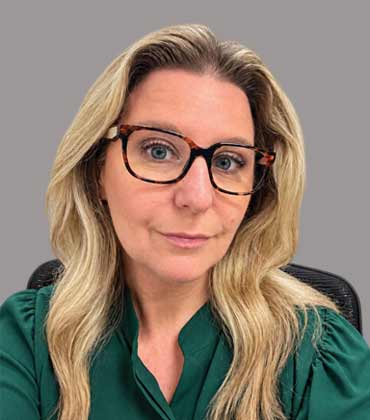
Lee Housley
The catchphrase ‘silver tsunami,’ just like ‘quiet quitting’ and ‘the great resignation,’ might seem like buzzwords of the moment, but in manufacturing, this has been a serious area of concern for longer than the phrase has been making headlines.
In Connecticut, manufacturing accounts for more than 11 percent of the state’s GDP. Couple that with the workforce across New England aging out faster than other areas of the country, and employers are facing a skills chasm, not just a gap. In what is referred to as ‘Aerospace Alley,’ spanning Connecticut and Western Massachusetts, aerospace manufacturers are confronted by a particularly significant workforce challenge.
As experienced employees approach retirement, organizations risk losing decades of institutional knowledge, technical expertise, and tribal knowledge that cannot simply be replaced by filling an open requisition. For Learning and Development (L&D) professionals, this reality requires immediate and creative solutions.
Building Strong Foundations for Digital Transformation
In the age of AI, automation and robotics, it is tempting to assume technology will solve our workforce challenges. In some respects, it may. But from my experience, many organizations are not positioned to fully leverage these technologies because unstable foundations cannot support the rapid expansion and adoption. Before we automate, digitize, or introduce AI into the process, we need to understand and standardize the process itself.
That means fixing the foundation. And some of the best people to help accomplish this are those who are getting ready to sunset their careers. Time is running out to capture their knowledge and wisdom so we can set the next generation up for success, because let’s face it, we have no other option other than to hire green talent and develop them ourselves.
Preserving Expertise through Structured Learning
At Hanwha Aerospace USA, we are leaning into this with urgency and optimism as we work to turn tribal knowledge into a system. Working in partnership with operations, engineering and quality, our L&D team is developing a framework to clearly define the learning outcomes for successful job performance.
The framework pairs instructor-led training with an on-the-job training companion designed to create a consistent, standardized learning experience. The goal is to provide learners with a clear standard, a consistent method for learning, and a repeatable path to qualification.
The goal is to provide learners with a clear standard, a consistent method for learning, and a repeatable path to qualification.
We are still in the development phase, but we have assembled a team of subject matter experts with varying levels of experience and tenure to help define this new standard. Once established, the framework will apply across all four of our Connecticut locations. Rooted in lean thinking, we are documenting a process that defines the safest, most effective and repeatable way to perform a task.
More importantly, we are capturing the best-known method and using it as the foundation for employee training and qualifications. This concept itself is not groundbreaking. In fact, it has proven effective in other industries for decades.
Making Knowledge Transfer Effective through Application
Earlier in my career, I worked in the energy sector, where I learned some of my most valuable L&D lessons. One model that has stayed with me is what is commonly known as a Time Merit Progression program. When new line workers and gas mechanics begin their careers, they enter a mutually agreed-upon performance-based program administered by the company and supported by the local unions. The company is responsible for providing quality classroom instruction. Lead men and senior crew leaders are responsible for the on-the-job training that brings that classroom knowledge to life in the field.
The model works because it recognizes a key concept about adult learning, which is that knowledge transfer doesn’t happen simply because information has been presented. It happens when people have the opportunity to apply that knowledge under the guidance of someone who knows the work.
Transforming Experience into a Legacy of Learning
Pairing less experienced employees with seasoned colleagues is effective and widely used across manufacturing. If a standard framework isn’t applied, it is difficult to ensure stable, repeatable results. The learner experience can vary dramatically from one trainer, shift, department, or location to another. The knowledge already exists. Our challenge is to capture it and share it in a meaningful, sustainable way.
This is where L&D can rise to the challenge. We can help our most experienced machinists, inspectors, technicians, engineers, and other skilled professionals transition toward retirement by channeling their expertise into developing the next generation as they conclude their careers. There is also an important human element at play here. For many experienced employees, their work is more than a job. Their expertise represents, sometimes, decades of problem-solving, craftsmanship and experience. Inviting them to help develop the next generation gives them an opportunity to leave behind something meaningful.
Fortunately, we don’t have to do it alone. There are also opportunities to strengthen operator development through continuing education resources offered by local universities, technical programs and even our own equipment suppliers. These partnerships can complement what is happening on the shop floor while reducing the burden on already lean L&D teams and helping to prevent burnout that can come from relying too heavily on a small group of SMEs.
The opportunity is to create an ecosystem of learning rather than expecting one department to solve the workforce challenge alone. We must help leaders and experienced employees see that transferring tribal knowledge is not another L&D initiative. It is critical to business continuity, workforce development, quality, safety and long-term growth.
We have to reframe the story. The departure of Baby Boomers from the workforce can certainly create challenges, but it can also create an opportunity to intentionally capture knowledge, standardize work, develop talent, and build stronger learning systems for the future. The question is not whether the knowledge will leave our organizations. Eventually, it will. The question is whether we will capture it before it does.
