

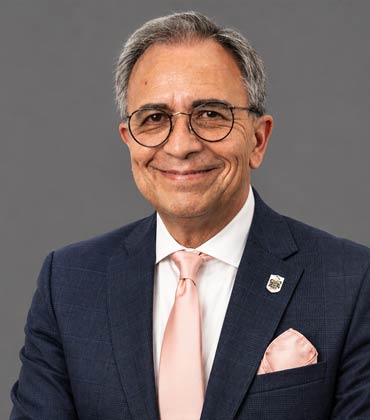
Fernando del Corral
Moving from Cooking to Manufacturing
A plate lives for 20 minutes and reaches one table. A package lives for weeks and reaches people you will never meet. That single difference changes everything about how food gets made. At Ideal Nutrition, where every chef-crafted meal is cooked, sealed and delivered to customers we will never meet, that difference shapes every decision we make.
Cooks who move into manufacturing expect the hard part to be the equipment. It isn't. The hard part is accepting that skill and instinct are not enough. In a plant, the food has to be right, and you have to prove it was right, for every lot, long after it leaves the building.
From instinct to a written system
‘A handful’ and ‘season to taste’ do not survive the move. A plant runs on exact weights, temperatures, times, and tolerances that any trained person on any shift can hit. The specification is also a legal document: what goes in the kettle must match the label, allergens included, so a casual supplier swap can mean a label change or a recall. At Ideal Nutrition, we check each meal label line by line against the recipe and the supplier labels behind every ingredient. When a supplier changes a sauce or a tortilla, our label changes with it.
Food safety becomes a written plan. At Ideal Nutrition, we run three side by side: USDA HACCP for our meat and poultry meals, FDA preventive controls (HARPC) for our other meals and a seafood hazard analysis for our fish and shrimp dishes. Each asks the same questions: what can go wrong, where is it controlled, how is the control verified, and what happens to product when it fails. An inspector judges you by the records. If the cooling log is blank, the cooling never happened.
Clean becomes a lab result, with an environmental monitoring program swabbing for pathogens like Listeria. Every ingredient and finished lot is coded so you can trace one step back and one step forward, and a timed mock recall proves it works. The label becomes a promise down to the ounce, backed by calibrated scales, correct tare and check-weighing during every run.
Ten times the batch is not ten times the recipe
Volume changes the physics. A large kettle holds heat far longer than a hotel pan, so many scaled-up products fail on cooling, not cooking, and the cooling step must be validated. In our own production, rice, sauces and braised meats get the closest watch on the way down to 41°F. ‘Good for about a week’ becomes a dated claim backed by a shelf-life study. Mixers, pumps and fillers change texture, yield and moisture, so seasoning gets re-tuned around the line, and cost and yield become part of the recipe.
In a plant, the food has to be right, and you have to prove it was right, for every lot, long after it leaves the building.
The people side is just as hard. Kitchens run on talent and hierarchy, and skill passes down by watching. A plant can’t depend on what lives in one person’s head. It needs written SOPs, documented training, a quality person with authority to hold product and a culture where anyone can stop the line without fear. In a plant, the record is right, not the loudest person in the room.
Where innovation earns its place
Innovation in food safety is rarely a breakthrough. Usually it is a tool that makes a manual step automatic, immediate and hard to fake. Wireless sensors watch coolers and blast chillers around the clock and alarm the moment temperatures drift. Electronic logs time-stamp entries, flag values outside critical limits and prompt corrective action on the spot.
Scanned lot codes turn a day-long mock recall into a report pulled in minutes. Checkweighers, metal detectors and label-verification scanners inspect every package, guarding against undeclared allergens, one of the most common causes of recalls. Process technologies like cook-chill and high-pressure processing can improve safety and shelf life once they are validated.
Certification builds on the same systems. For a plant already running HACCP and preventive controls, SQF certification is a realistic next step, and many retailers require it. SQF Edition 10, with audits expected to begin in January 2027, puts more weight on food safety culture and change management. That matters, because every new machine, ingredient or process reopens the hazard analysis. Document the change, reassess the risks, validate, and train before switching it on.
Developing Skills beyond Culinary Expertise
Cooks who make this transition successfully build a second set of skills alongside their culinary expertise. They learn to write specifications, SOPs and records that anyone can follow. They develop the ability to identify hazards and apply controls at every stage of the process. They read the relevant regulations and understand which agency governs each product.
They also become comfortable working with numbers like yields, costs, tare weights and trend data. They use formal sensory evaluation to turn a trained palate into a reliable lot check. As leaders, they learn to guide their teams by explaining the reasons behind each process rather than relying on rank.
The best people are bilingual. They talk flavor with a chef in the morning and critical limits with an inspector in the afternoon.
Preserving Craft While Ensuring Compliance
None of this means leaving the craft behind. A product earns shelf space because someone cared how it tasted. Keep tasting, keep pushing back on cheaper substitutes and keep the pride that makes a crew want the product right, not just compliant. It is why every Ideal Nutrition meal still carries the words ‘Chef Crafted.’
In a kitchen, done is a plate that tastes right. In a plant, done is a product that tastes right, is safe, weighs what the label says, can be traced lot by lot and comes from a room you’ve proven is clean. The customer will never meet you. Your records are how you earn their trust.
Advice for building a career
From my own experience, education is the one step I would not skip. In science-related professions, a strong educational background is what lets you think outside the box and find sound, fast solutions when something goes wrong. My graduate training- a master’s and a PhD set me up for that.
Without the fundamentals, you can still learn the job, but acquiring the know-how takes much longer and relies more on trial and error. For anyone serious about a long-term career in manufacturing, R&D or food safety, a graduate degree in food science or a related field is one of the best investments you can make.
Beyond that, earn the credentials employers look for: HACCP, PCQI, Seafood HACCP and SQF practitioner training. Start in quality assurance, production supervision or product development. Learn your cost per pound and your margin. Volunteer for the mock recall and the audit, and treat your inspector as a resource, not an enemy.
