
Thank you for Subscribing to Business Management Review Weekly Brief









Business Management Review: Speials Magazine
TMX Group
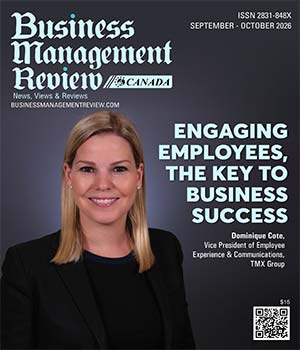
Engaging Employees, The Key To Business Success
Through this article, Dominique Cote, Vice President of Employee Experience & Communications at TMX Group, draws upon her 22 years of experience to emphasize the critical link between employee engagement, company culture and the Employee Value Proposition (EVP). She highlights the significance of regular employee check-ins through surveys to gauge satisfaction and identify areas for improvement. Cote outlines TMX Group’s approach to measuring and enhancing engagement, focusing on both outcomes and drivers and stresses the importance of targeted actions based on survey insights. She concludes by underscoring the pivotal role of engaged employees in fostering a high-performing culture and driving overall business success. After graduating from the University of Miami with a master’s degree in Communications for Public Relations, I embarked on a career that would eventually lead me to my current role as VP of Employee Experience & Communications. My journey began in a smaller company where I gained experience in various facets of communications, including advertising, PR, events, community relations and employee communications. This diverse exposure sparked my passion for the employee voice, shaping my career trajectory. Now, 22 years later, I oversee portfolios that include employee communications, engagement, charitable giving, linguistic services, wellness, recognition and overall employee experience. Here, I explore the relationship between employee engagement, company culture, and Employee Value Proposition (EVP). Culture, EVP And Employee Experience A company’s culture profoundly influences the employee experience, shaping daily interactions and overall job satisfaction. The Employee Value Proposition (EVP), on the other hand, is the articulation of the intended experience to prospective employees —a promise about what they can expect if/when they work here. Engagement emerges as the outcome of these employee daily experiences, reflecting employees’
Business Consulting
Turning trade show investments into memorable, high-impact experiences requires more than a booth and banner. Experienced trade show managers can make the event stand out while ensuring vendors stay within their allocated budget. Herb Besaw, president and CEO of SPOON Exhibits and Events, brings nearly 45 years of industry expertise to orchestrate impactful and lively trade show events. Under his guidance, the high-end, boutique tradeshow and event management firm has become renowned for its consultative approach and creative solutions that exceed client expectations. For over 25 years, it has been a partner activator and creative ally to craft distinctive and lively event experiences that resonate with target audiences. SPOON handles A-Z services for exhibits, product launches, sales events and educational sessions, which include booking exhibit space, onsite logistical support and managing registration. It is the answer for customers looking for a budget-friendly way to participate in the world of three dimensional marketing. “We bring a tremendous amount of experience in arranging trade shows, with a particular focus on the creative and experiential aspects of our business,” says Besaw.
Federal Defense Firm
Navigating business litigation is much like a strategic game of chess, where each move can have significant consequences. However, for those with a sharp analytical mind and strategic vision, it becomes a matter of skillfully uncovering opportunities and outmaneuvering challenges. This is the advantage that Oberheiden, a nationally recognized law firm, brings to high-stakes federal cases, safeguarding their clients' reputations, financial security, and freedom. The firm is staffed with legal professionals whose talents are as diverse and specialized as pieces on a chessboard. Former Justice Department trial attorneys anchor their litigation strategy, bringing extensive courtroom experience and a deep understanding of federal law. Complementing them are former Secret Service operatives and retired FBI agents, specialists in fraud detection and digital forensics, ensuring that no detail goes unnoticed. Additionally, while the former Director of the CIA, the former Secretary of State, and former members of the U.S. Congress may not engage directly in litigation, their strategic insights and connections lend credibility to the firm's cases. Collectively, these resources create an impregnable defense, making Oberheiden a formidable force in the legal arena— respected by clients and feared by adversaries. “In the area of business litigation, the diversity of cases we handle is vast. Our team has represented employers facing federal litigation threats or actual cases, including instances where businesses are sued by the U.S. government,” says Dr. Nick Oberheiden, founder of Oberheiden. “We also handle classic commercial litigation cases, ranging from breach of contract and tortious interference to intellectual property rights.”
Fractional Cio Services
NortheastCIOs
Turning Everyday Tech Operations into Strategic Momentum
Thomas Licciardello, Practice Lead and Principal CIO
Most companies today recognize that technology is a key vehicle for creating competitive advantage. Yet even with strong internal tech teams in place, many organizations find themselves struggling to harness the full potential of available solutions and tools. The issue is not a lack of technical expertise or effort. It is the absence of a senior voice to align technology with business strategy. NortheastCIOs bridges the gap, offering flexible, executive-level IT leadership that helps businesses transform routine technology work into a competitive business advantage. Thomas Licciardello, practice lead and principal CIO, has witnessed this pattern across mid-market businesses spanning industries such as healthcare, finance, media, education, and nonprofits. These organizations believe in the power of technology and want to use it to create competitive advantage, but their internal teams are often consumed by the immediate demands of operations. NortheastCIOs becomes the senior voice these teams are missing, offering guidance, mentorship, practical IT strategy and executive clarity. Through its fractional CIO services, the company provides organizations with seasoned leadership at a fraction of the cost, enhancing systems, refining processes, and aligning technology with business goals. “We are not here for a one-and-done fix. When companies choose a fractional CIO, it is a significant step, and we treat it that way. Our goal is to be a true partner, offering clarity, guidance, and long-term support from day one,” says Licciardello. Organizations initially reach out to NortheastCIOs for one primary reason: they recognize a critical leadership gap in their technology function but are unsure of the best path forward. They may be exploring the emerging concept of fractional executive leadership as a flexible and impactful solution to this challenge. NortheastCIOs begins by demonstrating the strategic value of fractional CIO services, outlining a comprehensive approach that transforms technology from a cost center into a competitive advantage.
Business Consulting
Dealing with Global Tax Compliance
Sergio Vazquez, Transfer Pricing Director, CEMEX
Business Consulting
Redefining Food Safety in School Nutrition
Jason Schwartz, Director of Safety and Risk Management, SFE- Southwest Foodservice Excellence
Business Consulting
Keys to Military Housing Success
Dexter Wong, Investment Manager, Military Housing, The Michaels Organization
Crisis Communication
Responsible AI: The Human-Machine Symbiosis
Sal Cucchiara, CIO and Head of Wealth and Investment Management Technology, Morgan Stanley [NYSE: MS]
Crisis Communication
Navigating the Evolution of ERP: Business Objectives, Research Extensions, and Digital Debt Management
Alfred Zhu, VP of Digital Technologies, The Middleby Corporation [NASDAQ: MIDD]
IN MY OPINION
Business Risk & Compliance Management
How Corporate Security Enhances Business Compliance
Bill Davis, Sr. Director Physical Security, Ally[NYSE: ALLY]
LAST WORD
Market Research
POTS over LTE: Business Communication Simplified
David McDermott, Director of Information Technology, O’Reilly Hospitality Management
IN FOCUS

Streamlining Compliance: Boutique Commercial Law Firms for Canadian Entrepreneurs
Boutique commercial law firms help growing Canadian companies simplify compliance through proactive legal guidance, effective governance, contract management and sustainable business planning.
Driving Business Growth: Effective Development and Sponsorship Strategies across Canada
Business development and sponsorship consultants help Canadian organizations drive growth, build partnerships, enhance visibility and achieve long-term success.
EDITORIAL
Building Stronger Businesses through Strategic Leadership
Organizations today are navigating an increasingly dynamic business environment shaped by rapid change, evolving workforce expectations and growing operational complexity. Leaders are expected to respond with agility while maintaining a clear focus on long-term objectives. In this edition of Business Management Review Canada, we explore the priorities and leadership approaches helping businesses adapt with confidence, strengthen performance and build a foundation for sustainable success.
Across industries, businesses are taking a more deliberate approach to growth. Rather than focusing solely on financial results, many are strengthening governance, refining operations and making more informed strategic decisions. At the same time, technology continues to support smarter planning, greater efficiency and improved collaboration, helping organizations remain resilient as they respond to an evolving business landscape.
At the center of this transformation are people. Organizations increasingly recognize that engaged employees, strong workplace cultures and thoughtful leadership contribute directly to business performance. When people feel valued, connected to a shared purpose and supported in their professional growth, they are more likely to collaborate, embrace change and help their organizations move forward with confidence. Building that foundation enables organizations to execute strategy more effectively and respond to change with greater agility.
With that foundation in place, leaders are also strengthening the systems and processes that support long-term success. As regulatory expectations evolve and stakeholder needs continue to change, businesses are reinforcing governance, strengthening risk management and aligning technology with broader organizational goals. Combined with a focus on meaningful customer experiences and continuous improvement, these efforts are helping organizations build trust, enhance resilience and create long-term value.
Business management will continue to evolve as organizations respond to changing markets, emerging technologies and new ways of working. We invite readers to explore the insights and perspectives featured throughout this issue and discover the ideas, strategies and leadership principles shaping the future of business management across Canada.
