
Thank you for Subscribing to Business Management Review Weekly Brief
Business Management Review: Speials Magazine

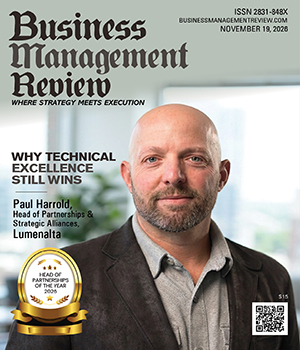
Paul Harrold
Why Technical Excellence Still Wins
A partnership can look impressive on paper and still deliver very little. Paul Harrold has learned that lesson from several sides of the table. He has led a services business, navigated acquisitions, built a deeply focused technology partnership, created a nonprofit ecosystem from scratch, and now leads partnerships and strategic alliances at Lumenalta, a data engineering and agentic AI firm. Across each chapter, one principle has remained constant: a partnership is only as valuable as the outcomes it creates. That perspective has shaped how Harrold approaches alliances today. He does not see partnerships as a collection of logos, programs, or marketing campaigns. He sees them as an extension of delivery capability, an ecosystem that should create measurable value for customers, partners, and the business. His approach was formed early in his career as president and CEO of Epoch Universal, where he owned the company’s overall P&L. At the time, Epoch Universal was a services-only delivery organization, so every alliance investment had to justify itself. Harrold evaluated partnerships almost like components of a supply chain, asking whether each investment would generate new service engagements, professional or managed-services opportunities, or meaningful pipeline. That discipline became more nuanced as his career progressed. When Epoch Universal was acquired by PCM, and PCM was later acquired by Insight, Harrold spent roughly four to five years navigating the integration of partner organizations with different vendor-management approaches. In a large value-added reseller and solutions-integrator environment, partnerships created value through lead generation, team enablement, and back-end economics such as rebates, thresholds, and market development funds tied to sales and service performance. Then came a different lesson at Lovelytics, a pure-play Databricks partner. There, Harrold saw the power of depth. He says, “A highly focused partnership
Market Research
The Colography Group
The Gold Standard in Shipping Intelligence
Michael Dames, President, Russell Reams, VP of Marketing & Client Services, Darren Lamb, VP of Research & Analytics
For more than forty years, The Colography Group has been the trusted source of logistics intelligence for companies that move goods at scale. Founded in 1983, just as U.S. deregulation halted federal freight reporting, the firm filled the data vacuum with an independent research model grounded in disciplined methodology. Cost, logistics and geography, the variables embedded in the company’s name, became the pillars it set out to measure with scientific precision. At the core of The Colography Group’s methodology is the National Survey, launched in 1993 and recognized as the industry’s most comprehensive freight intelligence program. Each year, it interviews 30,000 to 50,000 shippers, selected through a proprietary model factoring in industry, company size, and shipping spend to collect data on shipment type, distance, weight and border activity. Its methodology is rigorously tested by a university advisory panel and supported by a team that includes Ph.D.s in data science and logistics and veteran industry professionals. “We have to be defensible in what we do,” says Michael Dames, president. “Our clients base multi-million-dollar decisions on what we publish.” Analysts transform raw shipping data on volume, distance, weight and service levels into actionable intelligence, such as route performance models, pricing benchmarks, tariff exposure maps and demand forecasts. By modeling bidirectional trade flows, they provide a unified view of outbound revenue and backhaul costs. Annual and quarterly pricing studies reveal where competitors are compressing margins or making room for premium offerings. This blend of historical insight, scientific rigor and strategic adaptability has earned The Colography Group a seat with the industry’s leading logistics players.

Business Consulting

Strategic Business Advisory & Tax (SBAT)
Profit-Driven Advisory for Growing Businesses
Randi Sorenson, CEO
Strategic Business Advisory & Tax (SBAT) is an accounting firm with a difference. It is committed to driving growth for small businesses while simplifying the lives of their owners. A distinctive hands-on, advisory-first approach guides clients from where they are to where they want to be while building sustainable businesses along the way. Starting as a traditional tax and accounting practice, CEO Randi Sorenson and president Kelly Hibbits quickly recognized that small business owners need more than bookkeeping and tax filing support. They require streamlined operations and clear pathways for profitability. This realization led them to strategically expand their portfolio to offer business advisory services. SBAT’s comprehensive advisory services span growth planning, business coaching and exit strategies, along with accounting and taxation support. All services are designed to help owners transform their processes, systems and cultures and set them up for success. “We ask the right questions and deliver impactful solutions to help owners fix their business and make it more profitable,” says Sorenson. HIGH-IMPACT, HANDS-ON ADVISORY SUPPORT Sorenson and Hibbits, both seasoned CPAs, embed themselves into the day-to-day realities faced by clients in running their ventures. They bring analytical, finance-driven viewpoints to delve into each client’s business model regardless of the industry. The advisory service begins with a comprehensive initial meeting. The first part of the meeting is spent thoroughly understanding the client’s business. In the second part, focus is on exploring the owner’s vision three years into the future. Following the meeting, the team develops a three-year growth roadmap, anchored by 12-month benchmarks and 90-day action plans. To further support business growth, SBAT uses specialized software that compares the business’s KPIs against industry peers of similar size and region. Based on the findings, it generates periodic reports highlighting market trends and competitor comparisons. The goal is to pinpoint specific areas for improvement. Regular meetings are held with the owner and key employees to analyze unexpected challenges, brainstorm solutions and refocus on evolving goals. These in-depth discussions frequently uncover deeper cultural issues that tend to hold companies back. One construction business owner, for example, described SBAT’s involvement as “life-changing.” The client was held back by the controlling nature of two key employees, the accountant and a production staff member, which led to a hostile workplace environment. Once Sorenson restructured the accounting processes, the problematic employees quickly departed. This turn of events brought an immediate shift in the company culture that transformed the workplace environment. She introduced systematic changes further down the line. Regular supervisor meetings fostered collaboration among team members, which helped boost productivity and profitability. Strategically delegating crucial operations to a seasoned employee reduced the owner’s day-to-day burden, freeing him to enjoy his hobbies and spend more time with family.
Diversity and Inclusion

Diversity Equity and Inclusion Leaders Are the Catalysts for Change
Emily Gambacorta, Director of Diversity, Equity & Inclusion, Central Hudson
Procurement Services

The Evolution of Collectibles: Blending Nostalgia with Innovation
David Tierney, Sr. Creative Director, Panini America
Market Research
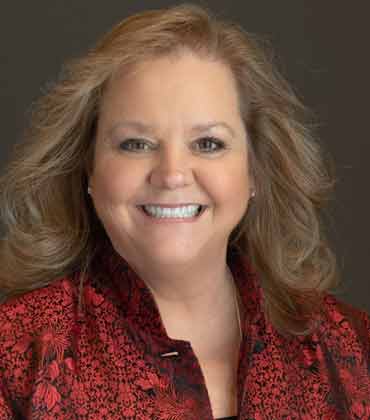
Turning Strategic Clarity into Everyday Culture
Tina Downing, Senior Director and Lead of AIS Business Solutions, Russell Investments
Leadership Development

A Seat at the Table: Why Timing Matters for Learning and Development
Philip Pinkerman, Learning, Development, and Recruiting Manager, Bristol Farms
Leadership Development
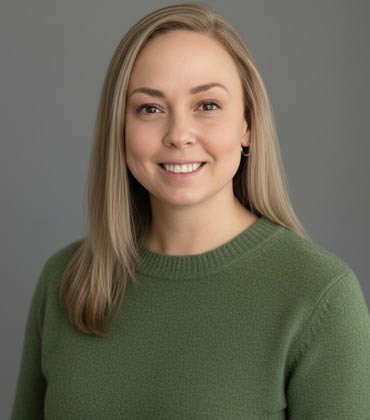
Creating a Learning Culture is not the Goal - Fostering it is
Sarah Hutton, Learning & Development Director, PJ Fitzpatrick

IN MY OPINION
Business Consulting
Shaping Workplaces Where Everyone Belongs
Pammi Bhullar, Senior Director, Corporate Citizenship (Head of DE&I and Philanthropy), Edelman Financial Engines

LAST WORD
Concierge Services
Elevating Real Estate Experiences: The Rise of Concierge Services, Seamless Transactions, and Expertise
Natalie Tredal, Shop Director & Transaction Concierge, Engel & Volkers
IN FOCUS

Business Coaching Redefined: Tailored Strategies for Growth
Business coaching serves to boost productivity while also enhancing leadership and decision-making capabilities. It encourages holistic growth, strengthening both work-related skills and personal development.
Strategic Success: Harnessing Business Brokerage for Maximum Sale Value
Business sale brokerage provides enhanced market visibility, professional pricing advice, and organized deal execution.
EDITORIAL
Building Strategic Partnerships That Deliver Lasting Value
In this edition of Business Management Review, we explore how strong partnerships, technical expertise and thoughtful leadership help businesses grow. As companies adapt to new technologies and increasingly complex business environments, working together effectively means setting clear goals, building trust and making the most of each partner’s strengths to achieve meaningful results.
Featured in our cover story, Paul Harrold, Head of Partnerships and Strategic Alliances at Lumenalta, is recognized as the Head of Partnerships of the Year 2026 for building technology partnerships focused on technical expertise and customer outcomes. Drawing on his experience in technology services and strategic alliances, Harrold prioritizes delivery capability. At Lumenalta, he has strengthened its Databricks partnership through technical certifications, specialist expertise and joint go-to-market initiatives, creating opportunities while addressing diverse customer needs.
Insights from featured CXOs further enrich the edition. Pammi Bhullar, Senior Director of Corporate Citizenship and Head of DE&I and Philanthropy at Edelman Financial Engines, shares how inclusion, employee development and community involvement shape a workplace where people feel valued. Through talent development and philanthropic initiatives, she focuses on creating opportunities for employees while keeping business goals and accountability in view.
Natalie Tredal, Shop Director and Transaction Concierge at Engel & Völkers, discusses the difference personal attention can make during a real estate transaction. From tracking deadlines and keeping clients updated to managing paperwork through technology, she helps make a complicated process easier to navigate, giving clients more time to focus on important decisions.
Both perspectives show that strong business relationships are built through everyday actions. Expertise is important, but people also remember who listens, keeps them informed and follows through. Organizations that understand their clients, invest in their employees and stand by their commitments are better positioned to build relationships that last.
