

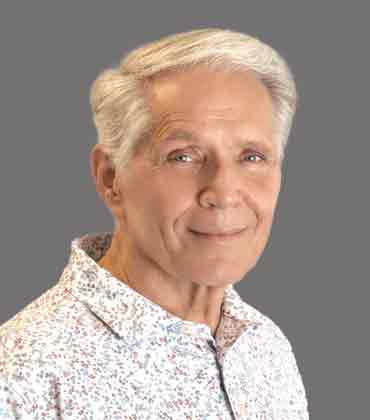
Rick Wood has always been drawn to what lies beyond the expected. For him, innovation begins with the curiosity to question convention and explore new possibilities. This mindset has carried through his professional journey, from building advanced telecommunications systems to developing technologies aimed at addressing challenges in energy and food.
Building Beyond The Conventional
Wood’s instinct to look beyond the expected emerged early in his career. With a degree in finance, he initially planned to become a banker but soon realized it wasn’t for him. He turned instead to advanced telecommunications technology, where he went on to build three technology companies.
Wood’s first company offered advanced telecommunications capabilities and services, including software-based technology that operated on a Harris Corporation telecommunications switch. Later, he applied that technology to a fulfillment operation that allowed businesses to log into a system in real time, monitor orders and process them efficiently.
Energy became the next frontier. Wood saw the space beginning to expand, particularly around solar, wind and other renewable technologies, and became intrigued by what could be discovered and developed. It was no longer simply a job. He could not wait to get to work and unleash his potential.
Learning To Lead By Teaching
While building and leading technology companies, Wood learned to turn ideas into action by guiding his teams. He views leadership as a form of teaching: leaders must clearly explain their vision so others can understand and carry it forward.
“If any of them don’t get it, you fail,” he says. “The more clearly a leader can communicate an idea, the better the team can understand it and perform.”
Leadership also demands speed. Leaders are presented with large amounts of information and must process it quickly while keeping the team moving toward its goals. Wood believes that ability requires nimbleness and courage.
For him, leadership also means being a visionary. Ideas must be transformed into practical solutions.
Critical Positivity and No Box Thinking
Wood describes his leadership philosophy as ‘critical positivity.’ Instead of dwelling on the negative, leaders should focus on what is good, move the team forward and reinforce positive behavior.
His approach has changed from an earlier leadership lesson that suggested a good leader knows when to ‘kick somebody in the pants’ and when to pat them on the back. Wood now believes the emphasis should be on the latter.
For Wood, positive reinforcement gives people a clearer understanding of what the organization is trying to accomplish while encouraging them to use the abilities that led to their hiring in the first place.
“We have no box,” he says. “That’s the way we want our people to think. We want them to be excited, use the skills they have to do new things without any limitations.”
The same principle extends to the example leaders set. Wood believes leaders must demonstrate the values they expect others to follow. When leaders become a good example of what they are trying to represent, teams and even the people they serve follow that example.
Building Teams That Can Think Together
Wood is driven by a conviction that strong innovation teams need more than technical expertise. They require open communication, collaboration and the ability to challenge ideas without taking disagreement personally. His approach centers on listening and asking, “Have you thought about this thoroughly?” rather than deciding whose idea is better.
That willingness to challenge established thinking also proves important in practice. Wood recalls working with a former nuclear engineer who initially believed the team was pursuing something that did not exist. As the technology they had developed began to demonstrate what was possible, he saw that the proof was already there.
The next challenge was advancing the software to accommodate it. The senior team, made up of five people, then discussed problems and potential solutions before narrowing them down. Wood used a thumbs-up system to gauge the team’s commitment. He wanted unanimous support before moving forward. Ultimately, the motivation behind the work is not limited to technology or commercial accomplishment. It is the enthusiasm and joy that come from fulfillment.
That principle once led the company to walk away from an opportunity involving a well-known automobile manufacturer. Wood was prepared to sign the agreement, but the rest of the senior team voted against it. He accepted their decision because he believed their investment in the idea was essential to the company’s success.
Making Innovation Usable
For Wood, the value of an idea ultimately comes down to what it can do. He defines innovation simply as something new that makes a difference but adds an important condition. It must be usable and needed to solve challenges. At Venturi, new technology is developed with specific problems in mind.
Two of those problems are energy and food. He sees the two as closely connected, with advances in energy also creating possibilities for addressing food production.
Venturi has developed a power-generation system that can generate additional electricity through its regeneration process, attracting claims that it breaks the laws of physics. He rejects that characterization, arguing that scientific understanding can change when new technology demonstrates a different possibility. The emphasis, however, remains on developing technology that can address real problems.
This out-of-the-box thinking has yielded intellectual property rights to a proprietary clean energy generation technology that achieves a transformative power output ratio: the system generates a substantially large quantity of electricity from a comparatively minimal energy input. The efficiency characteristics of this Technology — high output from low input — represent a material commercial and technological breakthrough that is the subject of Venturi’s patents and trade secrets.
For example, the high electricity requirements of vertical farms can make their economics difficult. Venturi subsequently partnered with a professor at MIT to develop what Wood describes as an oxygen reactor based on the professor’s ideas.
The system changes the molecular structure of water and delivers high level parts per million of oxygen to plant roots as needed. This can be used to grow crops such as pineapples, coconuts, peanuts, apples and wheat, extending vertical farming beyond the leafy greens commonly associated with it. The system can produce yields up to 10 times those of conventional growing, in its growing environment. Wheat could potentially be grown in one or two months instead of 8 to 9 months. The resulting crops are highly nutritious and become super organic.
The oxygen technology also features in an ocean-reoxygenation initiative developed with the Jacques Cousteau Foundation in Europe and a broader effort involving nations around the world. The plans involve converting large ships to electric operation using Venturi’s equipment and installing oxygen reactors to increase the parts per million of oxygen ocean water. Processing the water without disrupting its temperature is the challenge. Wood’s team considers analysis, numbers and other available information when making decisions. But when information is incomplete, gut feeling often plays a role.
Inspiration, Persistence and AWE
Wood credits mentors, including Robert D. Hales, the former president of Gillette, with influencing his leadership. He values the business lessons Hales shared and the genuine interest he showed in Wood and his work.
Inspired by Nikola Tesla, Wood sees inspiration as a product of openness, effort and persistence. He encourages emerging leaders to work hard and remain patient, noting that giving up too soon can mean missing success by one step.
“Ultimately, the motivation behind the work is not limited to technology or commercial accomplishment. It is the enthusiasm and joy that come from fulfillment,” he says.
He calls it ‘Awe,’ describing the feeling that comes when something is deeply satisfying and produces a sense of wonder. For Wood and his team, seeking that feeling has become part of the daily journey itself.
