

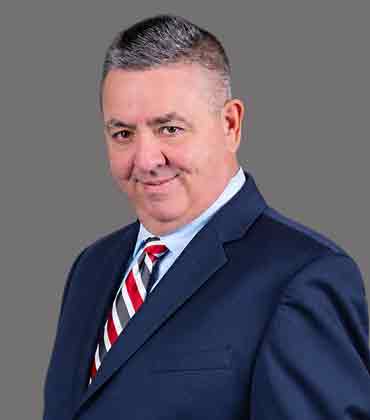
Randy Beimel is the founder and CEO of Global Regenerative Group (GRG), where he focuses on medical technology development, international distribution and physician education. With a background in finance and international business development, he works with medical specialists to bring regenerative technologies to market and connect patients with physicians offering advanced treatment options.
Randy Beimel had spent 15 years working in finance when an opportunity in medical technology opened a new chapter in his career. He had no medical background, but his experience as a stockbroker gave him a different perspective on the business opportunities within healthcare.
His journey into healthcare began after he moved to Florida and met entrepreneur Yali Golan, who wanted to develop a medical device called BioMac. Beimel financed the device and received its international distribution rights in return.
He subsequently established distribution networks in more than 40 countries, opening opportunities to invest in and distribute other medical devices, particularly in regenerative medicine.
He went on to build Global Regenerative Group (GRG), an international business focused on medical device distribution, physician education and innovation. Building on these efforts, he has expanded into medical tourism, connecting patients with specialists who can help them understand available regenerative medicine treatments.
Along the way, he developed relationships with physicians across different specialties and countries. These connections would become an important part of how he expanded the business beyond distribution.
Building Trust through Physician Education
Of GRG’s three main areas of work, medical device distribution, innovation and physician education, Beimel considers education the most important. Even the most advanced technology can accomplish little if doctors do not understand how to use it, when it is appropriate and which patients may benefit.
To support this learning, GRG helped establish and now manages three medical societies spanning orthopedics, urology, gynecology and general medicine. These societies have helped build a network of more than 3,000 physicians worldwide. GRG also organizes medical congresses where leading specialists teach regenerative techniques and share their clinical experience with other doctors.
Beimel keeps these gatherings relatively small, usually with fewer than 500 participants and 75 to 100 faculty members. This gives doctors more opportunities to ask questions, discuss procedures and learn directly from experienced specialists rather than sit through lectures in a crowded auditorium. The smaller format makes it easier for doctors and educators to interact and learn from one another. If we can be the company that bridges patients with new technologies, then I think we’ve done our job. That’s what we’ll be remembered for.
These relationships also support GRG’s distribution business. When introducing a medical device to a new market, Beimel can draw on respected physicians who already know the technologies. Their experience can help other doctors see how a device may benefit their patients, making it easier for GRG to build trust and expand into new markets.
The educational network has consequently become more than a platform for sharing knowledge. It helps Beimel enter new markets, build trust among physicians and identify opportunities for medical technology development.
Turning Physicians’ Ideas Into Opportunities
The physicians in Beimel’s network bring more than their expertise as educators. Their experience treating patients helps them identify gaps in existing medical technologies and opportunities for improvement.
Many have ideas for new devices but lack the time or business resources to develop them. Beimel works with these specialists to turn promising ideas into commercial products.
When he identifies a technology worth pursuing, he invests alongside the physicians and supports its development. Rather than manufacturing devices in-house, he works with external manufacturers to produce them. GRG then handles international distribution while retaining an equity stake in the technology.
This model brings together the clinical knowledge of physicians and Beimel’s financial expertise, allowing him to support innovation while creating opportunities for commercial growth.
With an established network of specialists involved in education and technology development, Beimel is now working to connect their expertise directly with patients.
Completing the Circle through Patient Access
Beimel sees a gap between advances in medical technology, physicians trained to use them and patients seeking treatment.
Patients generally rely on their doctors to explain available options. Yet every physician may not be familiar with certain newer techniques, while regulatory approval timelines and insurance coverage can further affect access to treatment.
Having built an international network of specialists, Beimel believes he can help patients learn about options they might otherwise never encounter.
Through medical tourism initiatives, he connects patients with physicians who can explain regenerative medicine treatments and assess their suitability. According to Beimel, GRG has been involved in stem-cell treatments for more than 100 patients over an 18-month period, including orthopedic and other applications.
He is also extending the educational event model developed for physicians to reach patients directly.
On December 6, 2026, GRG plans to host a Global Regenerative Health event in Dublin, Ireland, focused primarily on orthopedics. The gathering is expected to bring together more than 100 prospective patients and specialists to discuss available treatments, including nonsurgical options where clinically appropriate.
Beimel hopes to eventually expand these gatherings to accommodate 400 or 500 patients, allowing more people to meet experienced physicians and understand their treatment options.
This initiative completes the circle he describes in his leadership journey. He began by financing and distributing medical devices, developed a network for physician education and used those relationships to support innovation. He is now bringing that network closer to patients.
“If we can be the company that bridges the patients with the new technologies for them to be available. And if we can successfully do that, then I think we’ve done our job and we’ll be remembered for that,” says Beimel.
His efforts to connect these different parts of regenerative medicine, from commercial development to physician education and patient access, reflect the leadership behind his recognition as Regenerative Healthcare CEO of the Year 2026.
