

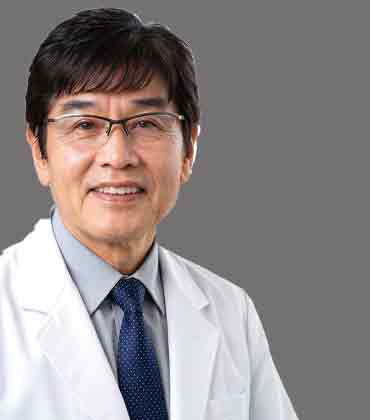
Dr. Keiji Terao’s career in chemical innovation began with a fascination for what chemistry could make possible. As a high-school student, he was inspired by Japanese chemist and entrepreneur Dr. Jokichi Takamine, whose belief that not a medical doctor but a chemist could help many people around the world encouraged Terao to pursue chemistry at university.
After graduating, he joined Wacker Chemie, a major German chemical company, where he met biologist Gerhard Schmid, who was developing an economical method for producing cyclodextrins. At a time when industrial production of α- and γ-cyclodextrins had just begun, and their applications were still largely undeveloped, the chance encounter with Gerhard introduced Terao to a class of molecules that would shape the next 25 years of his career.
He went on to establish CycloChem Bio as an applied research company dedicated to turning the properties of cyclodextrins into practical uses. Over time, that focus has grown into a researchdriven business built around understanding where cyclodextrins can create value.
A Business Built Around Application
The early years of the business were challenging. Cyclochem was established to import three types of cyclodextrins from Wacker Chemie’s U.S. manufacturing facility into Japan. β-cyclodextrin already faced competition from Japanese manufacturers, while α- and γ-cyclodextrins were only beginning to be produced industrially and had few applications or customers. With limited demand for α- and γ-cyclodextrins, sales remained modest in the early years.
For Terao, the lack of demand pointed toward the need for application research. The challenge was no longer simply to supply α- and γ-cyclodextrins, but to discover where their properties could create value.
“If α- and γ-cyclodextrins were to find a market, their uses had to be developed alongside the materials themselves,” he says.
Terao responded by making application research the purpose of CycloChem Bio. The research operation began with just two researchers and grew as individual projects succeeded. Under his leadership, it has developed into a multidisciplinary team of PhDs spanning medicine, engineering, science, agriculture and pharmacy.
A weekly journal club brings researchers together to examine cyclodextrin-related papers from different disciplinary perspectives. By sharing knowledge across these fields, the team has built expertise in how cyclodextrins can be applied across different areas, including medicine and nutraceuticals. For Terao, that combination of scientific disciplines and specialized knowledge of cyclodextrin applications is a key strength of the company.
From Scientific Depth To Application
That expertise starts with understanding what makes cyclodextrin so versatile. He was fascinated by cyclodextrin itself, a cyclic compound made of glucose molecules linked together in a bucket-like shape with a hydrophilic exterior and a hydrophobic interior. This allows it to host hydrophobic, or lipophilic, guest molecules within its cavity. The resulting inclusion phenomenon can be used for a wide range of purposes, including masking bitterness, astringency and unpleasant odors, improving stability, water solubility and bioavailability, slowing the release of aromas and converting viscous substances into fine powders. I think it comes down to whether the production cost of that product is economically acceptable to the market.
CycloChem Bio has spent 25 years turning that molecular property into applications through three generations of cycloencapsulation technology. The first generation focused on improving the bioavailability of highly functional ingredients such as Coenzyme Q10 and R-α-lipoic acid through solubilization and stabilization mainly using γ-cyclodextrin inclusion.
The second generation turned toward the mechanistic understanding and business development of α-cyclodextrin as a dietary fiber, including its potential to suppress blood glucose spikes, reduce small dense LDL cholesterol and support gut health.
The third generation broadens the application further, exploring how cyclodextrin can be used to turn discarded fruits and vegetables, peels, pulp residues and other surplus materials into fresh oligo powders with beauty and health applications while enabling longer-term storage. The approach also aims to contribute to the United Nations Sustainable Development Goals by finding value in underused materials. One example involves surplus milk. By adding α-cyclodextrin to milk and turning it into powder, long-term stabilization is possible. When water is added, it can be redispersed into milk. Terao wants to see this fresh oligo powder technology spread worldwide.
The same inclusion principle extends to the company’s work with other functional ingredients. In Kuding tea extract, for example, γ-cyclodextrin encapsulates ursolic acid, reducing its bitterness while improving its bioavailability. Terao often demonstrates the combination in seminars because it makes the effect of cyclodextrin immediately tangible.
A similar principle applies to rice bran policosanol. Encapsulating it with α-cyclodextrin improves its bioavailability and has also shown a synergistic effect in reducing small dense LDL cholesterol, according to Terao’s research.
Protecting Knowledge by Sharing It.
As CycloChem Bio has expanded its applications, Terao has also focused on how scientific knowledge can be protected, shared and extended through further research. He has filed about 40 patents while publishing more than 200 academic papers and 50 scientific books.
The purpose of patenting, in his view, is often less about creating an exclusive commercial position than preventing another company from later patenting the same innovation. Academic publications can serve a similar protective function by establishing knowledge publicly.
CycloChem Bio has expanded opportunities for joint research with more than 50 universities and corporate research institutions.
Terao’s leadership in the field extends into industry-academia collaboration as well. He serves as president of both the Japan Cyclodextrin Society and the Japan Cyclodextrin Industry Association, where he works to strengthen connections between scientific research and application development.
Where Science Meets The Market
For Terao, scientific depth and commercial scale need to develop in the right order. For a small company, he believes the starting point should be high-value products backed by strong scientific evidence, even when their commercial scale is limited. As the company grows, it can gradually pursue products with broader commercial potential.
“I think it comes down to whether the production cost of that product is economically acceptable to the market,” he says.
He points to α-cyclodextrin as an example. Terao describes α-cyclodextrin as a ‘super dietary fiber’ based on the company’s research, but notes that its price remains about three to four times higher than conventional dietary fibers, limiting its acceptance in the market.
For him, the challenge is finding a more economical way to produce α-cyclodextrin so its properties can become accessible at scale.
That consideration also informs Terao’s view of the future of functional ingredients.
As consumers combine different health goals and increasingly use powdered products, Terao expects powdered personalized supplements to become more common. CycloChem Bio has used its cycloencapsulation technology across more than 70 functional ingredients to address formulation challenges such as instability under heat, light, oxygen or acidic conditions, poor water solubility and undesirable taste or odor.
" If α- and γ-cyclodextrins were to find a market, their uses had to be developed alongside the materials themselves. "
Because many of the inclusion complexes of functional ingredients with cyclodextrins are already developed as powders, Terao sees this as a potential foundation for combining multiple functional ingredients with powdered foods such as protein, collagen or green juice.
The Industry-Academia Bridge
The journey from scientific discovery to commercial application also requires industry input at an early stage in the development process. Terao has seen university research struggle to become a viable business without industry involvement, reinforcing his belief that promising discoveries need commercial perspectives while they are still being developed.
“Science proven in the lab, no matter how great the discovery, rarely achieves commercial success without collaboration with industry,” he states.
That lesson brings together the different stages of Terao’s career. His early interest in chemistry led him to cyclodextrins, while application research turned their molecular properties into practical uses. At CycloChem Bio, he continues to connect scientific understanding with the commercial realities that determine whether an innovation can move beyond the laboratory and into the market.
